
 Ask Claude about this post
 Ask ChatGPT

Design teams at WhatsApp, Miro, Atlassian, Figma and GitHub are already shipping production code with AI, using Cursor, Claude Code and machine-readable design systems. Here are five lessons from the AI Conference 2026 for designers, plus where the designer-engineer handoff is heading next.
Last month I hosted the AI Conference 2026 for designers. Two days, 21 speakers from teams like WhatsApp, Adobe, Figma, Miro, Atlassian and GitHub, with 1,000 designers from 50+ countries watching live.
I build a lot with AI as a designer for my side projects, but I couldn't find anywhere to learn how AI designers and design teams actually work in real workflows and production.
This online conference solved that for me. Incredibly strong insights and learnings, and very hands-on.
Here are my key takeaways from the conference:
1. The designer-engineer handoff is collapsing, faster than I expected
Sebastian Rousseau runs the WhatsApp Web design system for hundreds of millions of users. His team is one designer and one engineer. One. He ships production code directly with Claude Code and VS Code, no Figma-to-engineer relay race.
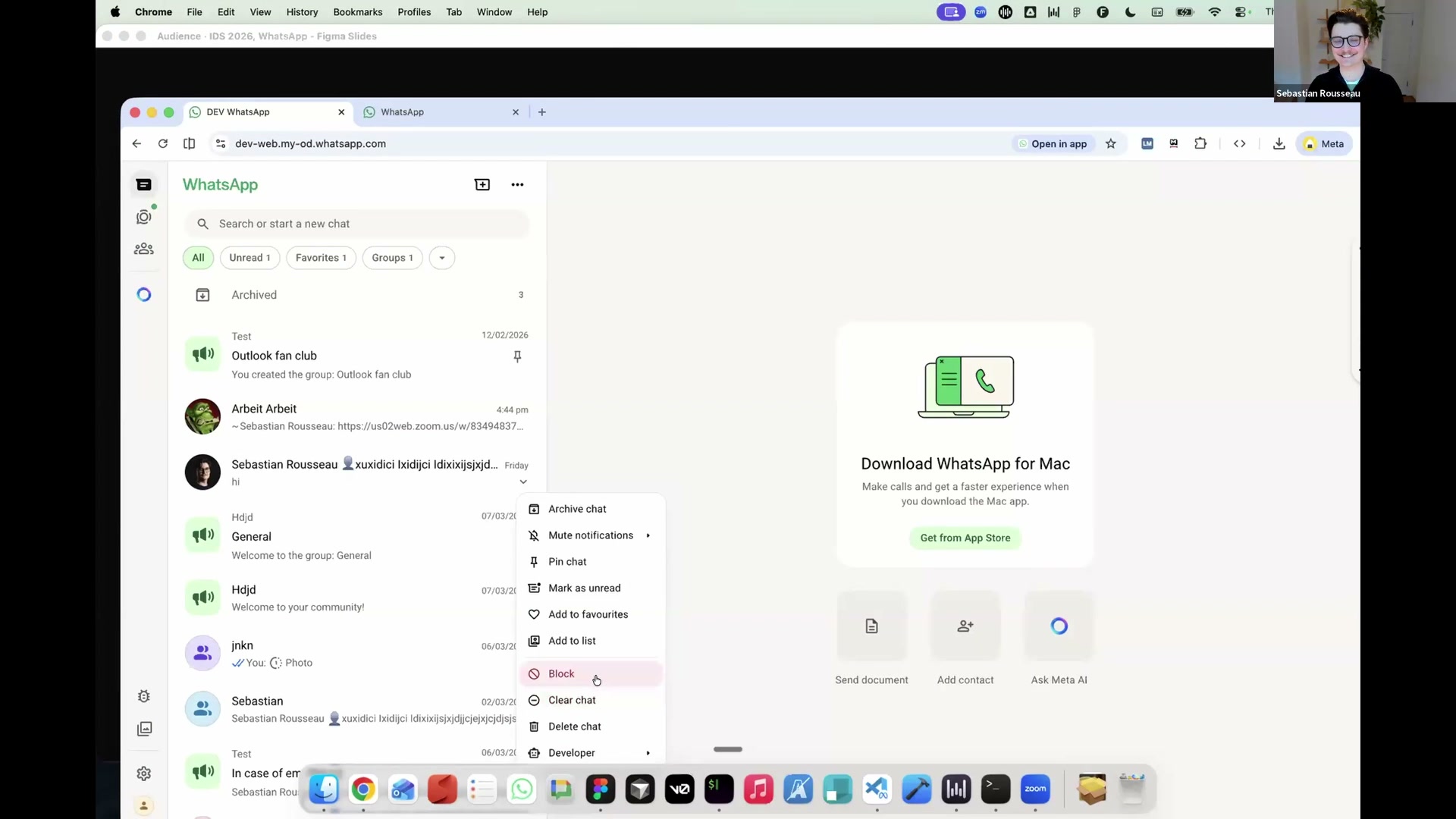
A year ago that would have sounded reckless. In his session it sounded inevitable.
Freya Stockman from Relevance AI put it more bluntly: AI-assisted workflows are now expected by the companies recruiting designers. Not preferred, expected.
What this means for you: if you are a designer who has been circling "should I learn Cursor or Claude Code" for months, that question is already answered.
2. Vibe coding without a system is just faster chaos
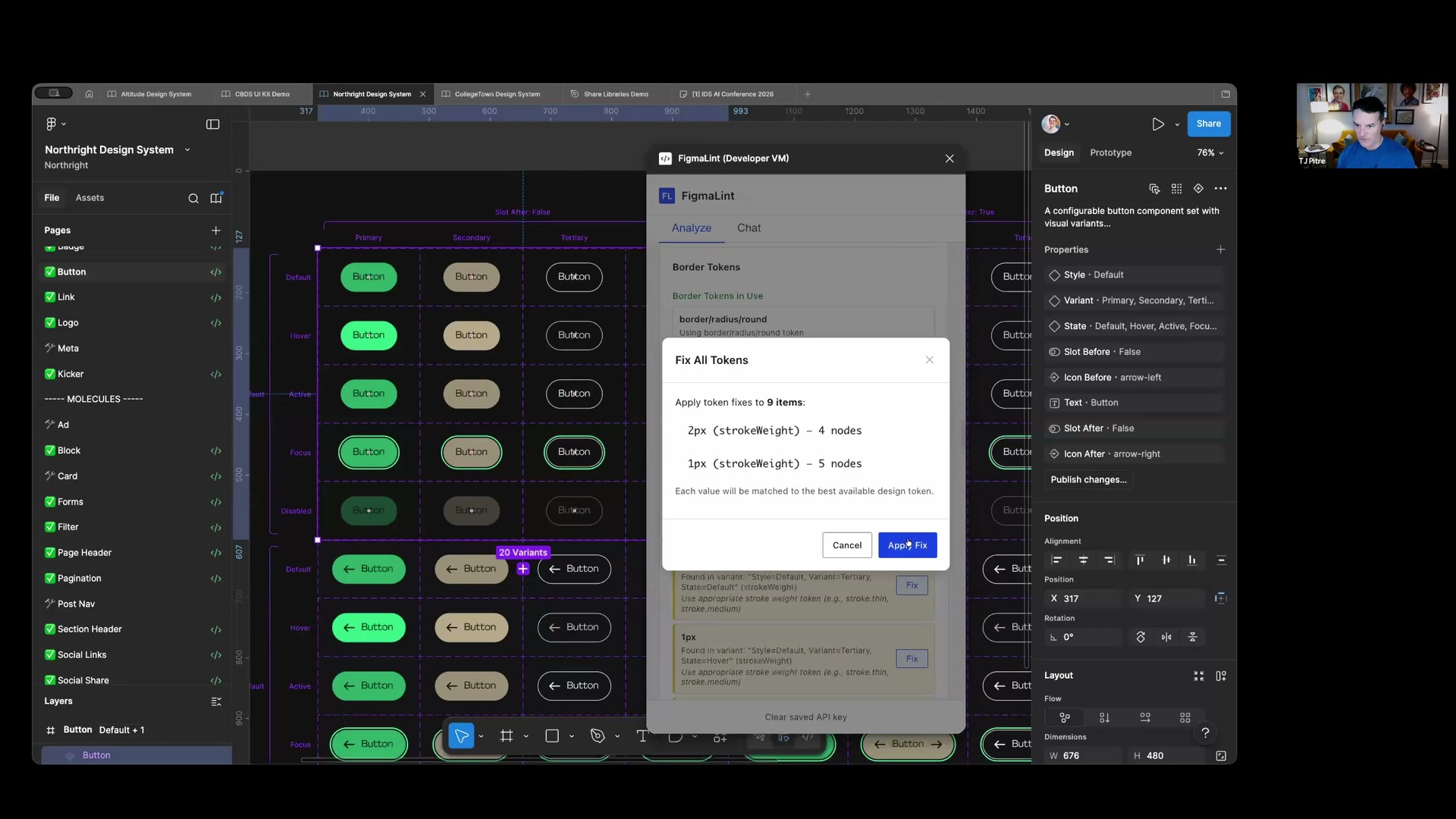
Brad Frost, Ian Frost and TJ Pitre made the point I kept coming back to: AI without a design system is unpredictable. AI with tokens, components, patterns and conventions becomes dependable.
The design system is not replaced by AI. It becomes the thing that makes AI safe to ship with.
Mr. Biscuit framed the same idea from the Figma side: "Most teams don't lose alignment because people are careless. They lose it because the system allows it." AI amplifies whichever direction your system is already pointing.
3. Design systems need to be readable by machines, not just humans
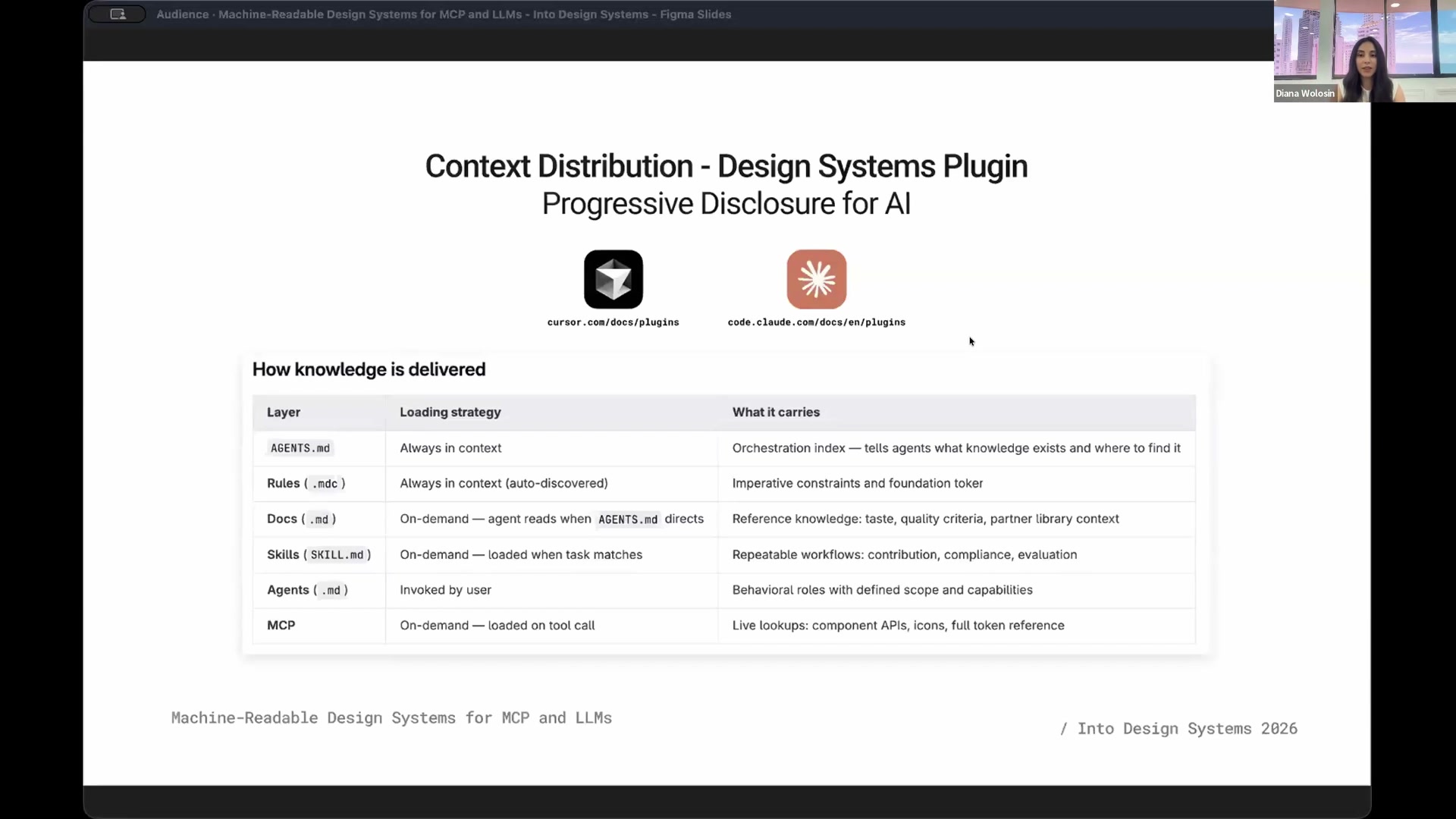
This was the shift almost every speaker circled back to.
Diana Wolosin talked about designing for MCP and LLMs. Jesse Gardner called design systems "AI infrastructure." Laura Fehre showed what happens when your docs move from Markdown to scripts agents can run.
Your design system documentation is now an API. If an AI agent reads it and understands your button variants, your team ships faster. If it doesn't, the agent invents a button, and you end up cleaning up drift for the rest of the quarter.
4. Agents can maintain the system, if you let them
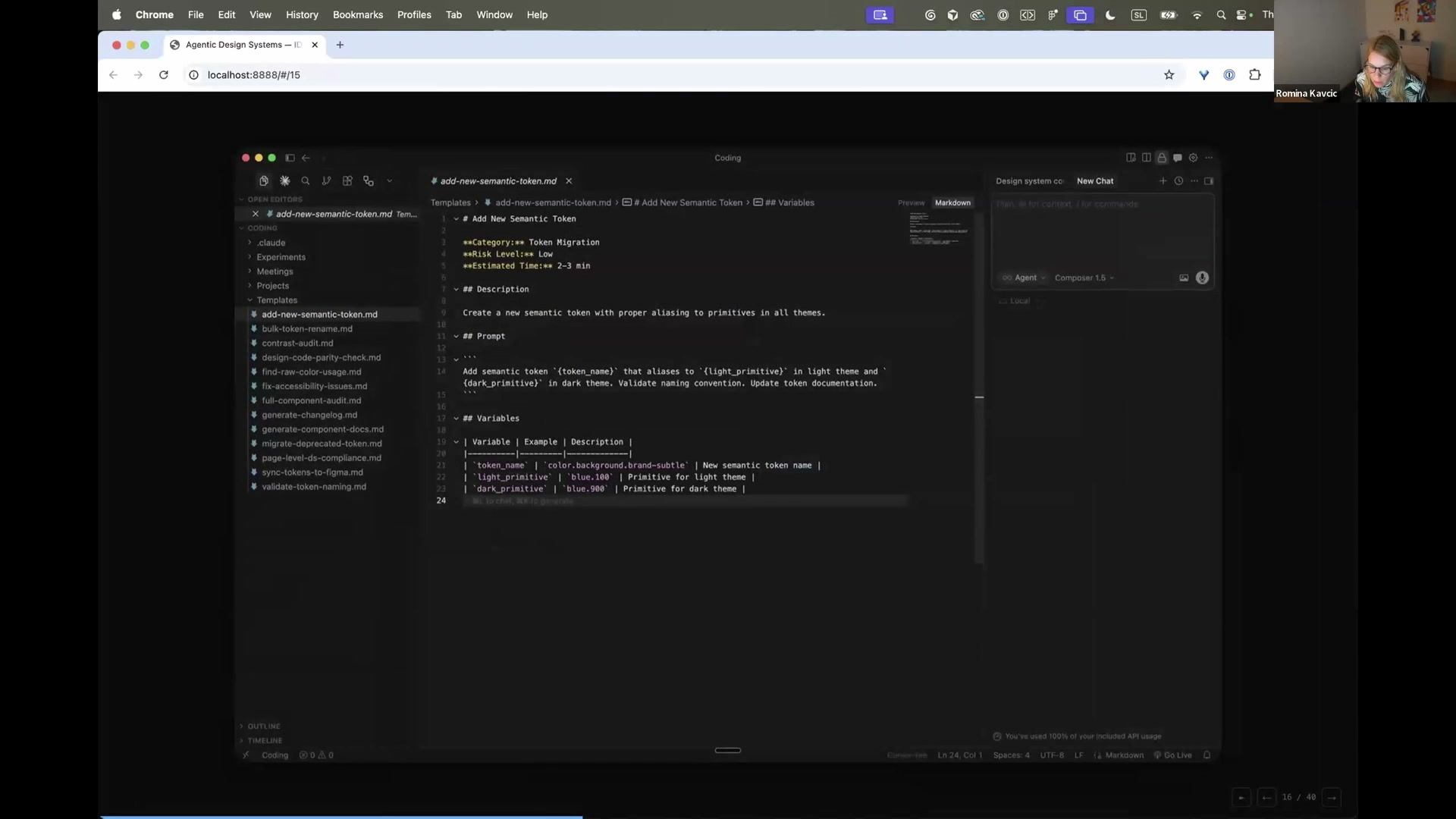
Romina Kavcic shared a number that stopped me: most design system teams spend 30 to 40% of their time just keeping the system working. Accessibility regressions, token misuse, doc drift.
Her framing for agentic design systems is five moves:
Agents patrolling the system so humans can do the harder work of deciding what should exist in the first place.
5. The best designers are not defending against AI, they are using it to go deeper
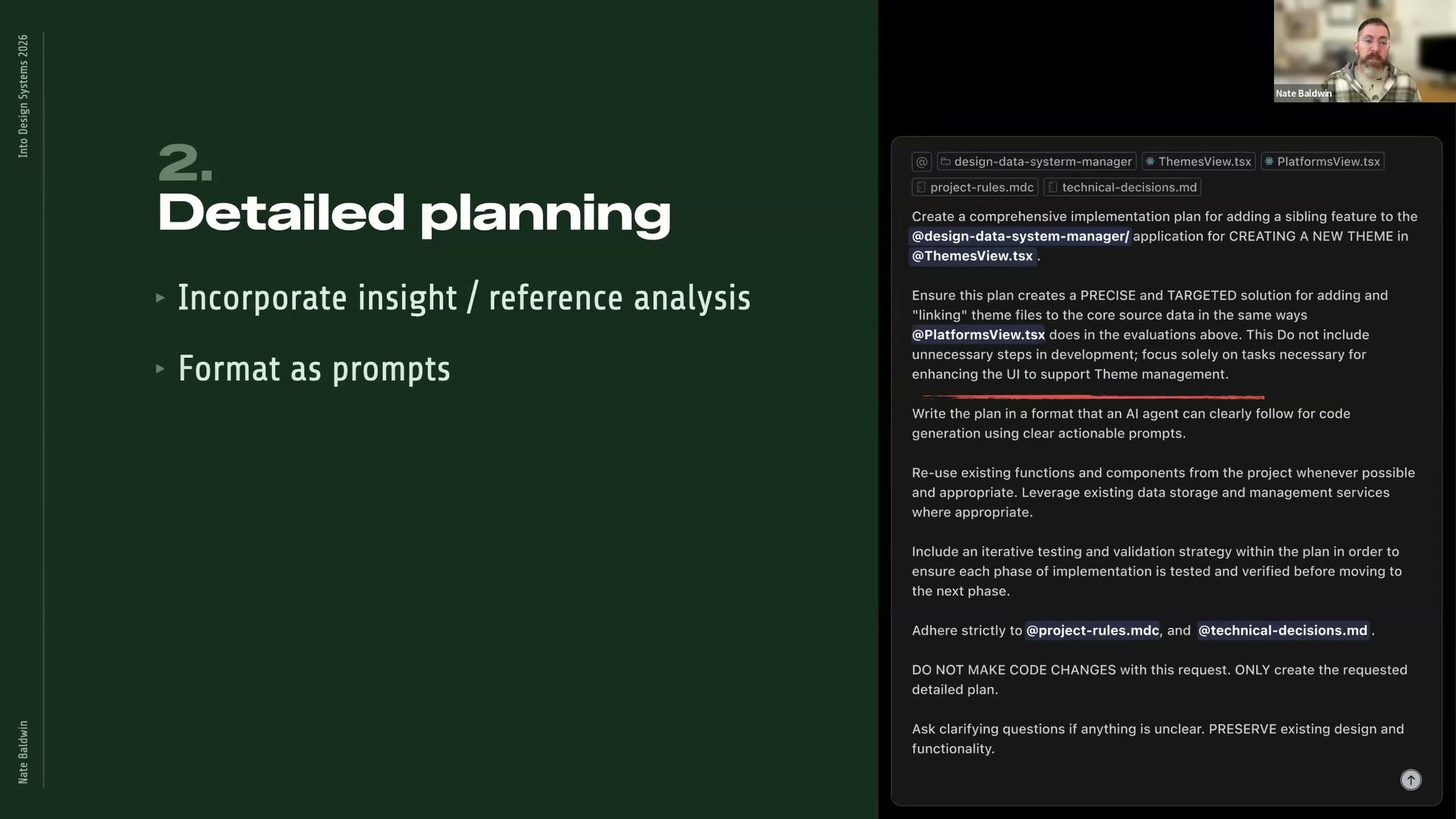
Nate Baldwin on prototyping for the unknown. Andressa Lombardo and Eddie Machado on how Miro is threading AI through their system without losing the soul of it. Jan Six on building real, shippable systems with agents.
None of these people sounded anxious. They sounded curious, and busy.
That was the mood of the whole conference. The designers furthest ahead on AI are not the loudest, they are the ones quietly shipping.
The recordings are live
All 15 sessions are on demand. Unique content, straight from the people shipping AI workflows at WhatsApp, Adobe, Figma, Miro, Atlassian and GitHub. Plus the FigJam resource board and 120 minutes of bonus AI sessions.
Plus: access to the FigJam board
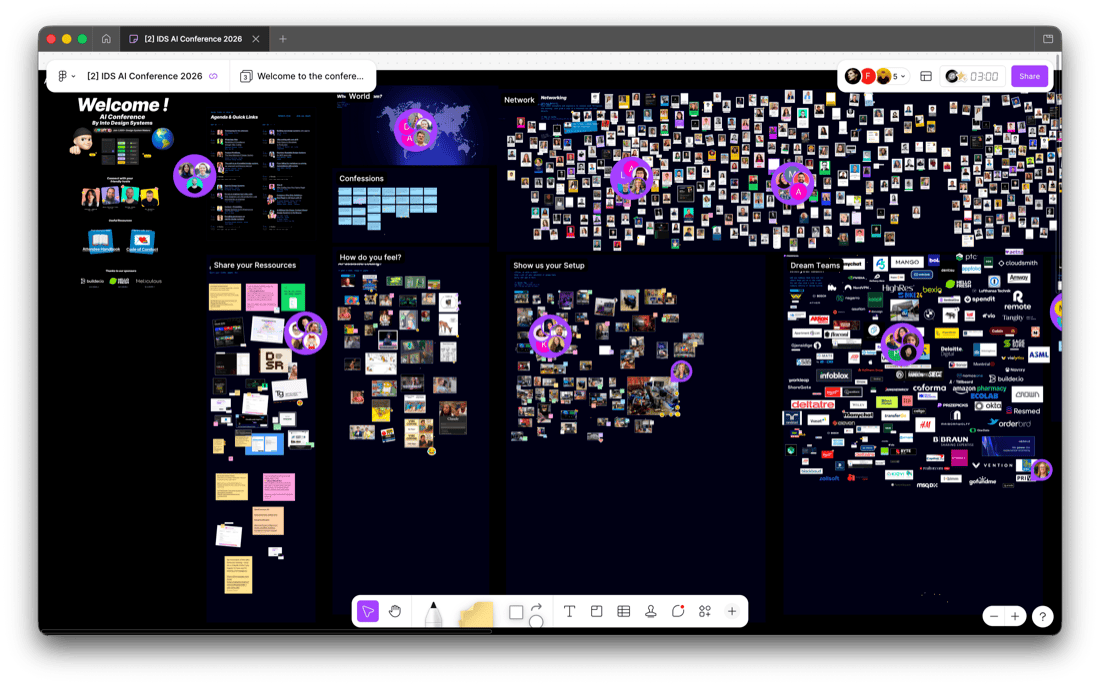
On top of every recording, you get access to the FigJam board from the live conference. Q&A from every session, 1,000 designers you can connect with, plus tons of resources, links and templates shared inside.
See you inside, Sil
Watch all 15 sessions on demand
One payment, lifetime access, no subscription. Includes certificate of completion, FigJam resource board and 120 minutes of bonus AI sessions.
Get the Recordings Pass →Related reading:


